DmC: Devil May Cry — System Requirements, FPS Estimate & Settings
2013 · Adventure, Action · Ninja Theory · ESRB Mature · Metacritic 85
Official system requirements
Publisher-published Minimum / Recommended values via RAWG, retrieved 2026-08-21. Real-world performance varies with drivers, resolution and your full build.
| Spec | Minimum | Recommended |
|---|---|---|
| OS | Minimum: | Recommended: |
| Processor | OS:Windows Vista(R)/XP, Windows 7, Windows 8 | OS:Windows Vista(R)/XP, Windows 7, Windows 8 |
| Memory | Processor:Intel(R) Core(TM)2 Duo 2.4 Ghz or better, AMD Athlon(TM) X2 2.8 Ghz or better | Processor:Intel(R) Core(TM)2 Quad 2.7 Ghz or better, AMD Phenom(TM)II X4 3 Ghz or better |
| Graphics | Memory:2 GB RAM | Memory:4 GB RAM |
| Storage | Graphics:NVIDIA(R) GeForce(R) 8800GTS or better, ATI Radeon(TM) HD 3850 or better | Graphics:ATI Radeon(TM) HD 6950 or better |
| DirectX | DirectX®:9.0c | DirectX®:9.0c |
| Item 7 | Hard Drive:9 GB HD space | Hard Drive:9 GB HD space |
| Item 8 | Sound:Standard audio device | Sound:Standard audio device |
Multi-GPU FPS estimate
Estimated average FPS by GPU at 1080p / 1440p / 4K, derived from DmC: Devil May Cry's demand tier (tier 8, Very demanding (flagship GPU)) and published TechPowerUp-style relative-performance indices (RTX 4090 = 100), retrieved 2026-08-29. Planning estimates, not benchmarks.
| GPU | 1080p | 1440p | 4K |
|---|---|---|---|
| RTX 4090 | 67 | 44 | 25 |
| RTX 4080 Super | 60 | 40 | 23 |
| RTX 4080 | 58 | 38 | 22 |
| RX 7900 XTX | 64 | 42 | 24 |
| RX 7900 XT | 60 | 40 | 23 |
| RTX 4070 Ti Super | 51 | 34 | 19 |
| RX 7800 XT | 51 | 34 | 19 |
| RTX 4070 Super | 48 | 32 | 18 |
| RTX 4070 | 45 | 30 | 17 |
| RX 7700 XT | 46 | 31 | 18 |
| RTX 3070 | 42 | 28 | 16 |
| RX 6800 XT | 51 | 33 | 19 |
| RTX 4060 Ti | 37 | 24 | 14 |
| RX 6700 XT | 45 | 30 | 17 |
| RTX 3060 | 34 | 22 | 13 |
| RX 6600 XT | 38 | 25 | 15 |
| RTX 2060 | 31 | 20 | 12 |
| GTX 1660 Super | 25 | 17 | 10 |
| RX 580 | 29 | 19 | 11 |
| GTX 1060 6GB | 24 | 16 | 9 |
| GTX 1650 | 19 | 13 | 8 |
| Intel Arc A770 | 39 | 26 | 15 |
| UHD 770 (integrated) | 8 | 8 | 8 |
Method: a game's demand tier maps to a “GPU index needed for ~60 FPS at 1080p”; each GPU's relative index produces an estimate via a diminishing-returns curve, then scaled for resolution. Source: TechPowerUp GPU database (relative performance), 2026-08-29.
Similar games you may tune next
Limbo
2010 · Adventure, Action
Open profile →Grand Theft Auto IV
2008 · Adventure, Action
Open profile →The Walking Dead: Season 1
2012 · Adventure, Action
Open profile →Little Nightmares
2017 · Platformer, Adventure
Open profile →Alan Wake
2010 · Shooter, Adventure
Open profile →Detroit: Become Human
2018 · Adventure, Action
Open profile →Garry's Mod
2004 · Adventure, Action
Open profile →Amnesia: The Dark Descent
2010 · Indie, Adventure
Open profile →Optimize DmC: Devil May Cry for your hardware
Pick your GPU, CPU, resolution and target refresh rate, then generate a printable settings card with per-preset expectations and upscaler guidance.
Optimize DmC: Devil May Cry for your PC
This is a planning estimate derived from the game's demand tier, not a benchmark.
My DmC: Devil May Cry Settings Card
Generated at GameFigs on 2026-09-25. Game demand tier: 8/9.
Release & version notes
Official release date: 2013-01-15. Ongoing patches and version history are published by the developer — for the latest patch notes, see the official store or support page. GameFigs summarizes the official release only and does not invent patch dates.
About DmC: Devil May Cry
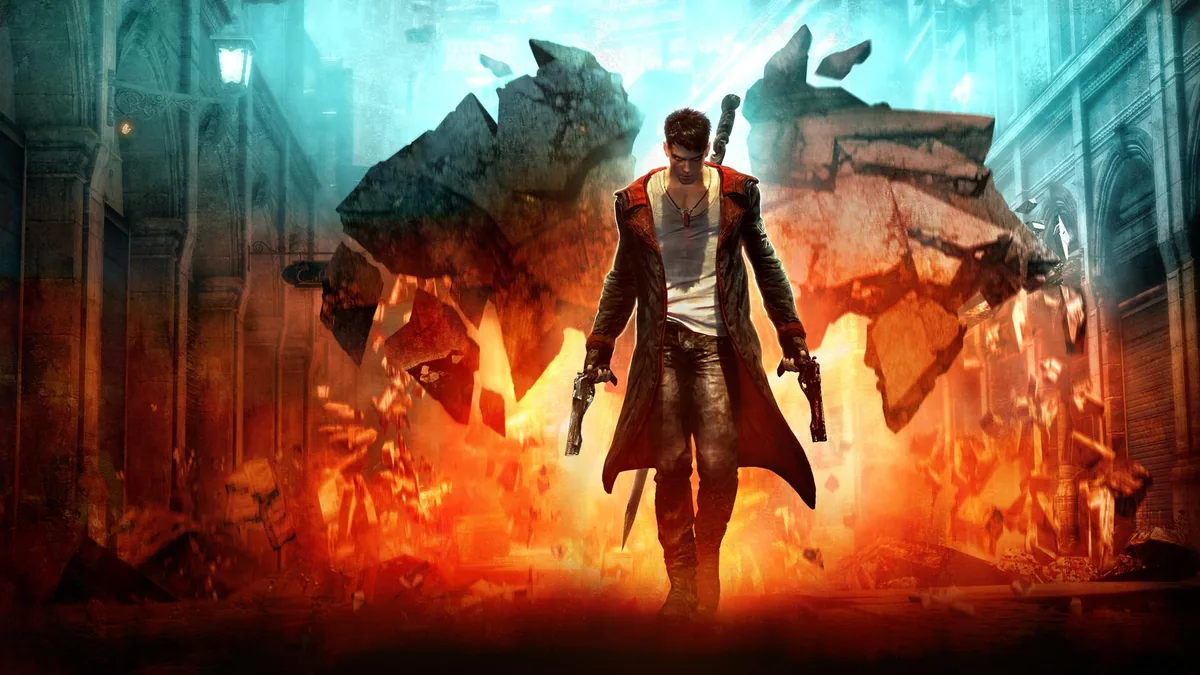
DMC: Devil May Cry is a hack-and-slash adventure game, the fifth installment in Capcom’s Devil May Cry franchise and reboot of the series. This is the first game in the series not developed by Capcom, but rather by English studio Team Ninja. Concerning story, the game is connected to the previous game and changes the cast of characters and even Dante’s (the series main protagonist) iconic appearance (which was met with indignation from the series fans at the time). The game’s story is notable for its social commentary regarding mass-media and modern capitalism drawbacks. The gameplay overall is very similar to the other installments of the Devil May Cry series and is heavily focused on fast-paced fighting with hordes of demons with occasional puzzles and platforming sections. The main change in the game’s combat mechanics is the Angel and Devil modes. They alternate Dante’s and attacks and special abilities. The modes are activated by holding left or right trigger (on the controller) which makes switching between them instant and allows performing complex combos, combining each mode’s unique features.
Sources & attribution
- Game data (release year, genres, platforms, system requirements, description, cover art) via RAWG.io, retrieved 2026-08-21.
- GPU relative-performance indices via TechPowerUp GPU database (relative performance), retrieved 2026-08-29.
- FPS estimates on this page are GameFigs planning estimates from the demand-tier + GPU-index model — not benchmark results.
How the DmC: Devil May Cry optimization card & FPS estimate are computed
Each game is scored on a 0–9 demand tier from its published PC requirements (and a year/genre fallback when requirements are absent). The FPS estimate compares your selected GPU's relative-performance index against the tier's required index using a diminishing-returns curve, then scales for resolution. The settings card maps the demand tier and your hardware to a starting preset, an FPS band and an upscaler recommendation. All outputs are planning guides — verify in-game with the built-in benchmark when available.
Tools for DmC: Devil May Cry
Check your hardware against this title, then set your gear up for it.