Monster Hunter: World — System Requirements, FPS Estimate & Settings
2018 · Adventure, Action, RPG · Capcom · ESRB Teen · Metacritic 89
Official system requirements
Publisher-published Minimum / Recommended values via RAWG, retrieved 2026-08-21. Real-world performance varies with drivers, resolution and your full build.
| Spec | Minimum | Recommended |
|---|---|---|
| OS | Minimum: | Recommended: |
| Processor | Requires a 64-bit processor and operating system | Requires a 64-bit processor and operating system |
| Memory | OS: WINDOWS® 7, 8, 8.1, 10 (64-bit required) | OS: WINDOWS® 7, 8, 8.1, 10 (64-bit required) |
| Graphics | Processor: Intel® Core™ i5-4460, 3.20GHz or AMD FX™-6300 | Processor: Intel® Core™ i7 3770 3.4GHz or Intel® Core™ i3 8350 4GHz or AMD Ryzen™ 5 1500X |
| Storage | Memory: 8 GB RAM | Memory: 8 GB RAM |
| DirectX | Graphics: NVIDIA® GeForce® GTX 760 or AMD Radeon™ R7 260x (VRAM 2GB) | Graphics: NVIDIA® GeForce® GTX 1060 (VRAM 3GB) or AMD Radeon™ RX 570 (VRAM 4GB) |
| Item 7 | DirectX: Version 11 | DirectX: Version 11 |
| Item 8 | Network: Broadband Internet connection | Network: Broadband Internet connection |
Multi-GPU FPS estimate
Estimated average FPS by GPU at 1080p / 1440p / 4K, derived from Monster Hunter: World's demand tier (tier 5, Moderate (mainstream GPU)) and published TechPowerUp-style relative-performance indices (RTX 4090 = 100), retrieved 2026-08-29. Planning estimates, not benchmarks.
| GPU | 1080p | 1440p | 4K |
|---|---|---|---|
| RTX 4090 | 150 | 99 | 57 |
| RTX 4080 Super | 135 | 89 | 51 |
| RTX 4080 | 129 | 85 | 49 |
| RX 7900 XTX | 144 | 95 | 55 |
| RX 7900 XT | 135 | 89 | 51 |
| RTX 4070 Ti Super | 115 | 76 | 44 |
| RX 7800 XT | 115 | 76 | 44 |
| RTX 4070 Super | 108 | 71 | 41 |
| RTX 4070 | 101 | 67 | 39 |
| RX 7700 XT | 104 | 69 | 40 |
| RTX 3070 | 94 | 62 | 36 |
| RX 6800 XT | 114 | 75 | 43 |
| RTX 4060 Ti | 83 | 55 | 32 |
| RX 6700 XT | 101 | 67 | 39 |
| RTX 3060 | 76 | 50 | 29 |
| RX 6600 XT | 86 | 57 | 33 |
| RTX 2060 | 69 | 45 | 26 |
| GTX 1660 Super | 57 | 38 | 22 |
| RX 580 | 66 | 44 | 25 |
| GTX 1060 6GB | 54 | 36 | 20 |
| GTX 1650 | 43 | 28 | 16 |
| Intel Arc A770 | 88 | 58 | 33 |
| UHD 770 (integrated) | 18 | 12 | 8 |
Method: a game's demand tier maps to a “GPU index needed for ~60 FPS at 1080p”; each GPU's relative index produces an estimate via a diminishing-returns curve, then scaled for resolution. Source: TechPowerUp GPU database (relative performance), 2026-08-29.
Similar games you may tune next
Dishonored
2012 · Adventure, Action
Open profile →Hades
2020 · Indie, Adventure
Open profile →Bastion
2011 · Indie, Adventure
Open profile →ARK: Survival Evolved
2015 · Adventure, Action
Open profile →SEGA Mega Drive and Genesis Classics
2010 · Adventure, Action
Open profile →No Man's Sky
2016 · Adventure, Action
Open profile →Black Desert Online
2014 · Adventure, Action
Open profile →Kingdom Come: Deliverance
2018 · Adventure, Action
Open profile →Optimize Monster Hunter: World for your hardware
Pick your GPU, CPU, resolution and target refresh rate, then generate a printable settings card with per-preset expectations and upscaler guidance.
Optimize Monster Hunter: World for your PC
This is a planning estimate derived from the game's demand tier, not a benchmark.
My Monster Hunter: World Settings Card
Generated at GameFigs on 2026-09-25. Game demand tier: 5/9.
Release & version notes
Official release date: 2018-01-26. Ongoing patches and version history are published by the developer — for the latest patch notes, see the official store or support page. GameFigs summarizes the official release only and does not invent patch dates.
About Monster Hunter: World
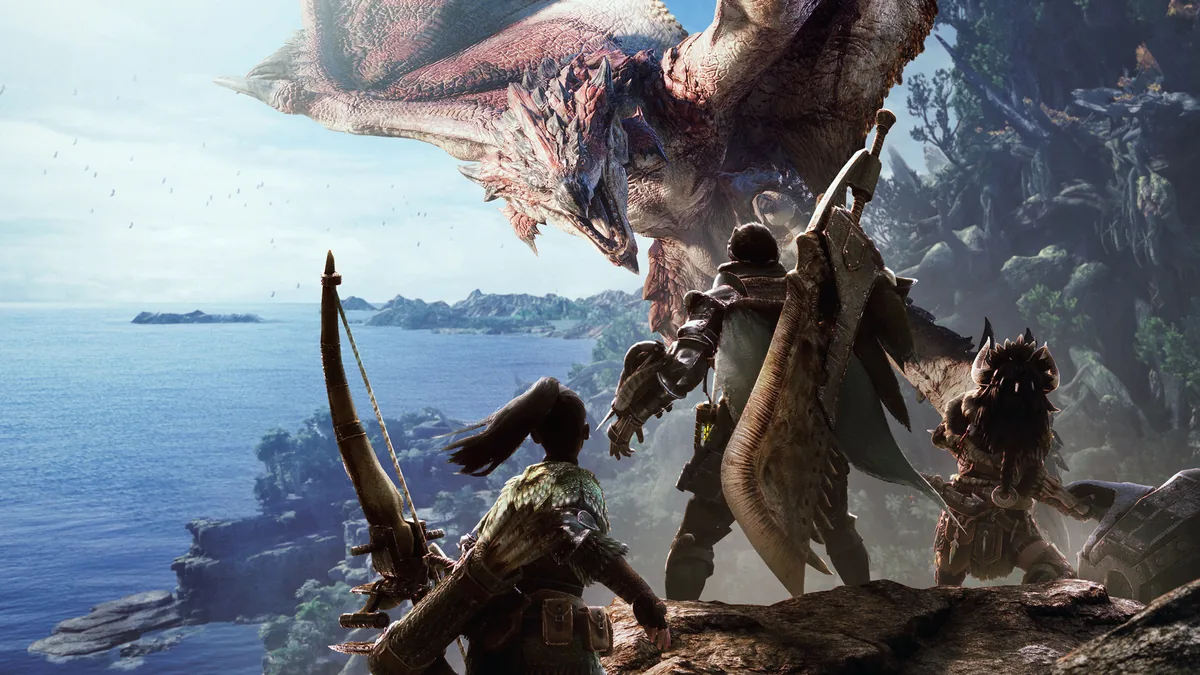
Monster Hunter: World is the fifth game in the Japanese franchise Monster Hunter, which is about hunting giant beasts. It is set in a medieval fantasy setting, on a continent known as the New World that is being colonized by the humans from the Old World. The plot revolves around a dragon migration called Elder Crossing. Your protagonist is a hunter, whose name and appearance can be customized. You traveled from the Old World to study and hunt the dragons and other local monsters. The hunter, accompanied by an assistant, starts at the city of Astera, from where they can freely wander the open world. There are six regions in the New World, each with its own base camp. The camps are where you have to thoroughly prepare before every expedition, gathering equipment and provision. Before you can fight monsters, they need to be tracked down using Scout flies and studied to discover their habits, strengths, and weaknesses. There are no character levels, so your hunter’s effectiveness relies on the hunting gear you have equipped. Advanced armor and weapons can be created using a detailed crating system. Many items that you found on missions, including body parts of monsters, can be used for crafting.
Sources & attribution
- Game data (release year, genres, platforms, system requirements, description, cover art) via RAWG.io, retrieved 2026-08-21.
- GPU relative-performance indices via TechPowerUp GPU database (relative performance), retrieved 2026-08-29.
- FPS estimates on this page are GameFigs planning estimates from the demand-tier + GPU-index model — not benchmark results.
How the Monster Hunter: World optimization card & FPS estimate are computed
Each game is scored on a 0–9 demand tier from its published PC requirements (and a year/genre fallback when requirements are absent). The FPS estimate compares your selected GPU's relative-performance index against the tier's required index using a diminishing-returns curve, then scales for resolution. The settings card maps the demand tier and your hardware to a starting preset, an FPS band and an upscaler recommendation. All outputs are planning guides — verify in-game with the built-in benchmark when available.
Tools for Monster Hunter: World
Check your hardware against this title, then set your gear up for it.