Titan Quest Anniversary Edition — System Requirements, FPS Estimate & Settings
2016 · Action, RPG · THQ Nordic
Official system requirements
Publisher-published Minimum / Recommended values via RAWG, retrieved 2026-08-21. Real-world performance varies with drivers, resolution and your full build.
| Spec | Minimum | Recommended |
|---|---|---|
| OS | Minimum: | Recommended: |
| Processor | OS: Windows XP / Vista / 7 / 8 / 10 32 or 64 bit | OS: Windows XP / Vista / 7 / 8 /10 32 or 64 bit |
| Memory | Processor: 2.0 GHz CPU | Processor: 3.0 GHz CPU Dual or Quad Core |
| Graphics | Memory: 1 GB RAM | Memory: 2 GB RAM |
| Storage | Graphics: 128 MB NVIDIA GeForce 6800 series or ATI Radeon X800 series or equivalent | Graphics: 256MB NVIDIA or AMD card |
| DirectX | DirectX: Version 9.0c | DirectX: Version 9.0c |
| Item 7 | Storage: 5 GB available space | Storage: 5 GB available space |
| Item 8 | Sound Card: DirectX compatible | Sound Card: DirectX compatible card |
Multi-GPU FPS estimate
Estimated average FPS by GPU at 1080p / 1440p / 4K, derived from Titan Quest Anniversary Edition's demand tier (tier 8, Very demanding (flagship GPU)) and published TechPowerUp-style relative-performance indices (RTX 4090 = 100), retrieved 2026-08-29. Planning estimates, not benchmarks.
| GPU | 1080p | 1440p | 4K |
|---|---|---|---|
| RTX 4090 | 67 | 44 | 25 |
| RTX 4080 Super | 60 | 40 | 23 |
| RTX 4080 | 58 | 38 | 22 |
| RX 7900 XTX | 64 | 42 | 24 |
| RX 7900 XT | 60 | 40 | 23 |
| RTX 4070 Ti Super | 51 | 34 | 19 |
| RX 7800 XT | 51 | 34 | 19 |
| RTX 4070 Super | 48 | 32 | 18 |
| RTX 4070 | 45 | 30 | 17 |
| RX 7700 XT | 46 | 31 | 18 |
| RTX 3070 | 42 | 28 | 16 |
| RX 6800 XT | 51 | 33 | 19 |
| RTX 4060 Ti | 37 | 24 | 14 |
| RX 6700 XT | 45 | 30 | 17 |
| RTX 3060 | 34 | 22 | 13 |
| RX 6600 XT | 38 | 25 | 15 |
| RTX 2060 | 31 | 20 | 12 |
| GTX 1660 Super | 25 | 17 | 10 |
| RX 580 | 29 | 19 | 11 |
| GTX 1060 6GB | 24 | 16 | 9 |
| GTX 1650 | 19 | 13 | 8 |
| Intel Arc A770 | 39 | 26 | 15 |
| UHD 770 (integrated) | 8 | 8 | 8 |
Method: a game's demand tier maps to a “GPU index needed for ~60 FPS at 1080p”; each GPU's relative index produces an estimate via a diminishing-returns curve, then scaled for resolution. Source: TechPowerUp GPU database (relative performance), 2026-08-29.
Similar games you may tune next
The Witcher 3: Wild Hunt
2015 · Action, RPG
Open profile →The Elder Scrolls V: Skyrim
2011 · Action, RPG
Open profile →Borderlands 2
2012 · Shooter, Action
Open profile →Fallout 4
2015 · Action, RPG
Open profile →Cyberpunk 2077
2020 · Shooter, Action
Open profile →Warframe
2013 · Shooter, Massively Multiplayer
Open profile →Horizon Zero Dawn
2017 · Action, RPG
Open profile →The Witcher: Enhanced Edition Director's Cut
2008 · Action, RPG
Open profile →Optimize Titan Quest Anniversary Edition for your hardware
Pick your GPU, CPU, resolution and target refresh rate, then generate a printable settings card with per-preset expectations and upscaler guidance.
Optimize Titan Quest Anniversary Edition for your PC
This is a planning estimate derived from the game's demand tier, not a benchmark.
My Titan Quest Anniversary Edition Settings Card
Generated at GameFigs on 2026-09-25. Game demand tier: 8/9.
Release & version notes
Official release date: 2016-08-31. Ongoing patches and version history are published by the developer — for the latest patch notes, see the official store or support page. GameFigs summarizes the official release only and does not invent patch dates.
About Titan Quest Anniversary Edition
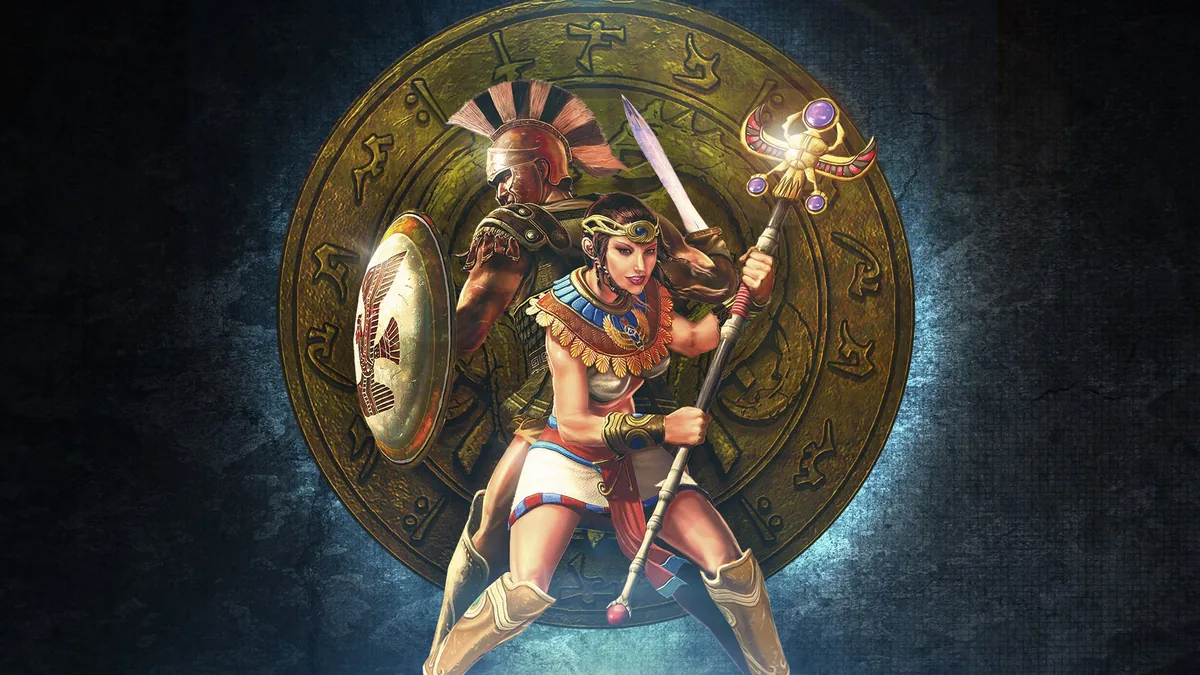
Titan Quest Anniversary Edition is an extended version of the original action role-playing slasher Titan Quest, released in honor of game’s 10th anniversary. The game is set in the world of pre-Roman age and includes 3 locations: Ancient Greece, Egypt, and eastern civilizations. The story begins with a narration about Titans, who ruled the entire world before the Olympians. The idea is that a trio of Telkines managed to break off the communication between Earth and Olympus and started terrorizing the mortal world. The protagonist is a hero, who is expected to defeat Telkines and to restore the conduit linking to worlds. To assume the role of the mythical hero players need to customize their own character: choose the gender and appearance. The further action continues in a traditional hack and slash manner. Players navigate the 3D world through the overhead third-person view and lead the protagonist with the mouse, while special abilities are tied to keyboard buttons. The Anniversary edition includes all possible fixtures and improvements of graphics and gameplay.
Sources & attribution
- Game data (release year, genres, platforms, system requirements, description, cover art) via RAWG.io, retrieved 2026-08-21.
- GPU relative-performance indices via TechPowerUp GPU database (relative performance), retrieved 2026-08-29.
- FPS estimates on this page are GameFigs planning estimates from the demand-tier + GPU-index model — not benchmark results.
How the Titan Quest Anniversary Edition optimization card & FPS estimate are computed
Each game is scored on a 0–9 demand tier from its published PC requirements (and a year/genre fallback when requirements are absent). The FPS estimate compares your selected GPU's relative-performance index against the tier's required index using a diminishing-returns curve, then scales for resolution. The settings card maps the demand tier and your hardware to a starting preset, an FPS band and an upscaler recommendation. All outputs are planning guides — verify in-game with the built-in benchmark when available.
Tools for Titan Quest Anniversary Edition
Check your hardware against this title, then set your gear up for it.