Lara Croft and the Temple of Osiris — System Requirements, FPS Estimate & Settings
2014 · Adventure, Action, Puzzle · Square Enix · Metacritic 73
Official system requirements
Publisher-published Minimum / Recommended values via RAWG, retrieved 2026-08-21. Real-world performance varies with drivers, resolution and your full build.
| Spec | Minimum | Recommended |
|---|---|---|
| OS | Minimum: | Recommended: |
| Processor | OS: Windows Vista, Windows 7, Windows 8 | OS: Windows Vista, Windows 7, Windows 8 |
| Memory | Processor: 2.0 GHz high end Dual Core CPU | Processor: Quad core CPU: AMD Phenom II X4 955 or Intel Core i5-750 |
| Graphics | Memory: 4 GB RAM | Memory: 8 GB RAM |
| Storage | Graphics: AMD Radeon HD 6000 series or better / NVidia GeForce 500 series or better | Graphics: AMD Radeon HD R7/ NVidia GTX 650 |
| DirectX | DirectX: Version 11 | DirectX: Version 11 |
| Item 7 | Storage: 5 GB available space | Storage: 5 GB available space |
Multi-GPU FPS estimate
Estimated average FPS by GPU at 1080p / 1440p / 4K, derived from Lara Croft and the Temple of Osiris's demand tier (tier 2, Light (entry discrete GPU)) and published TechPowerUp-style relative-performance indices (RTX 4090 = 100), retrieved 2026-08-29. Planning estimates, not benchmarks.
| GPU | 1080p | 1440p | 4K |
|---|---|---|---|
| RTX 4090 | 392 | 259 | 149 |
| RTX 4080 Super | 351 | 232 | 134 |
| RTX 4080 | 338 | 223 | 128 |
| RX 7900 XTX | 375 | 248 | 143 |
| RX 7900 XT | 351 | 232 | 134 |
| RTX 4070 Ti Super | 300 | 198 | 114 |
| RX 7800 XT | 300 | 198 | 114 |
| RTX 4070 Super | 282 | 186 | 107 |
| RTX 4070 | 264 | 175 | 101 |
| RX 7700 XT | 272 | 179 | 103 |
| RTX 3070 | 247 | 163 | 94 |
| RX 6800 XT | 296 | 196 | 113 |
| RTX 4060 Ti | 217 | 143 | 83 |
| RX 6700 XT | 264 | 175 | 101 |
| RTX 3060 | 199 | 131 | 76 |
| RX 6600 XT | 225 | 148 | 85 |
| RTX 2060 | 180 | 119 | 68 |
| GTX 1660 Super | 149 | 98 | 57 |
| RX 580 | 172 | 114 | 65 |
| GTX 1060 6GB | 141 | 93 | 53 |
| GTX 1650 | 112 | 74 | 43 |
| Intel Arc A770 | 228 | 151 | 87 |
| UHD 770 (integrated) | 46 | 30 | 17 |
Method: a game's demand tier maps to a “GPU index needed for ~60 FPS at 1080p”; each GPU's relative index produces an estimate via a diminishing-returns curve, then scaled for resolution. Source: TechPowerUp GPU database (relative performance), 2026-08-29.
Similar games you may tune next
Limbo
2010 · Adventure, Action
Open profile →INSIDE
2016 · Adventure, Action
Open profile →FEZ
2012 · Adventure, Action
Open profile →Portal
2007 · Action, Puzzle
Open profile →Grand Theft Auto IV
2008 · Adventure, Action
Open profile →The Walking Dead: Season 1
2012 · Adventure, Action
Open profile →Little Nightmares
2017 · Platformer, Adventure
Open profile →Half-Life 2: Episode Two
2007 · Shooter, Action
Open profile →Optimize Lara Croft and the Temple of Osiris for your hardware
Pick your GPU, CPU, resolution and target refresh rate, then generate a printable settings card with per-preset expectations and upscaler guidance.
Optimize Lara Croft and the Temple of Osiris for your PC
This is a planning estimate derived from the game's demand tier, not a benchmark.
My Lara Croft and the Temple of Osiris Settings Card
Generated at GameFigs on 2026-09-25. Game demand tier: 2/9.
Release & version notes
Official release date: 2014-12-08. Ongoing patches and version history are published by the developer — for the latest patch notes, see the official store or support page. GameFigs summarizes the official release only and does not invent patch dates.
About Lara Croft and the Temple of Osiris
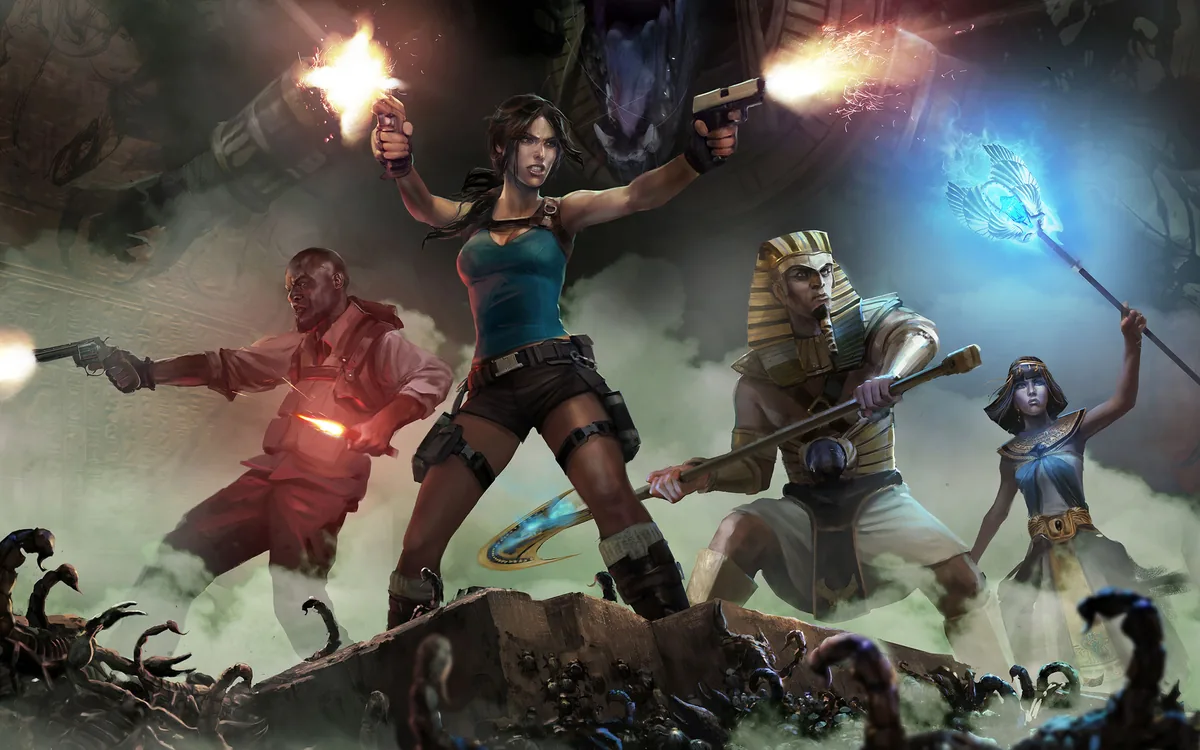
The sequel to Lara Croft and the Guardian of Light, and a spin-off to the larger Tomb Raider franchise. This time, our famous adventurer Lara Croft and her rival tomb raider Carter Bell travel to Egypt to search for the ancient temple, where a magical artifact, Stuff of Osiris, is hidden. The game is set in the temple and its dungeons, designed in Ancient Egyptian aesthetics. Besides shooting monsters, Lara and her partners have to avoid all kind of traps that will immediately remind you of Indiana Jones films. Completing specific missions will grant the player rings and amulets that enhance characters' skills and abilities.
Just like the previous game, The Guardian of Light uses the isometric view. The game allows for a cooperative mode for up to four players. All puzzles are automatically adjusted to the number of players. You can play not only as Lara but also as her friendly rival Carter Bell and two Egyptian gods, Isis and Horus, who were imprisoned in the temple for millenniums by the evil god Set. Their goal is to gather together and revive Osiris, the god who was dismembered by Set, and who can save the Earth from Set's evil. While human characters use firearms and grappling hooks, the gods are armed with the magic Stuff of Osiris.
Sources & attribution
- Game data (release year, genres, platforms, system requirements, description, cover art) via RAWG.io, retrieved 2026-08-21.
- GPU relative-performance indices via TechPowerUp GPU database (relative performance), retrieved 2026-08-29.
- FPS estimates on this page are GameFigs planning estimates from the demand-tier + GPU-index model — not benchmark results.
How the Lara Croft and the Temple of Osiris optimization card & FPS estimate are computed
Each game is scored on a 0–9 demand tier from its published PC requirements (and a year/genre fallback when requirements are absent). The FPS estimate compares your selected GPU's relative-performance index against the tier's required index using a diminishing-returns curve, then scales for resolution. The settings card maps the demand tier and your hardware to a starting preset, an FPS band and an upscaler recommendation. All outputs are planning guides — verify in-game with the built-in benchmark when available.
Tools for Lara Croft and the Temple of Osiris
Check your hardware against this title, then set your gear up for it.