SMITE — System Requirements, FPS Estimate & Settings
2015 · Action · Hi-Rez Studios · Metacritic 83
Official system requirements
Publisher-published Minimum / Recommended values via RAWG, retrieved 2026-08-21. Real-world performance varies with drivers, resolution and your full build.
| Spec | Minimum | Recommended |
|---|---|---|
| OS | Minimum: | Recommended: |
| Processor | OS: Windows XP SP2, Windows Vista or Windows 7 | OS: 64-bit: Vista, Win 7, Win 8 |
| Memory | Processor: Core 2 Duo 2.4 GHz or Althon X2 2.7 GHz | Processor: Intel Core i5-750, 2.67 GHz / AMD Phenom II X4 965, 3.4 GHz |
| Graphics | Memory: 2 GB RAM | Memory: 4 GB RAM |
| Storage | Graphics: ATI or Nvidia graphics card with 512MB video ram or better and Shader Model 3.0+ support. (ATI Radeon 3870 or higher, Nvidia GeForce 8800 GT or higher) | Graphics: NVIDIA GeForce GTX 560 / AMD Radeon HD 6950 or better with 768 MB+ of VRAM (DirectX 11 Compatible) |
| DirectX | Storage: 10 GB available space | Network: Broadband Internet connection |
| Item 7 | Sound Card: DirectX compatible sound card | Storage: 10 GB available space |
| Item 8 | — | Sound Card: DirectX compatible sound card |
Multi-GPU FPS estimate
Estimated average FPS by GPU at 1080p / 1440p / 4K, derived from SMITE's demand tier (tier 8, Very demanding (flagship GPU)) and published TechPowerUp-style relative-performance indices (RTX 4090 = 100), retrieved 2026-08-29. Planning estimates, not benchmarks.
| GPU | 1080p | 1440p | 4K |
|---|---|---|---|
| RTX 4090 | 67 | 44 | 25 |
| RTX 4080 Super | 60 | 40 | 23 |
| RTX 4080 | 58 | 38 | 22 |
| RX 7900 XTX | 64 | 42 | 24 |
| RX 7900 XT | 60 | 40 | 23 |
| RTX 4070 Ti Super | 51 | 34 | 19 |
| RX 7800 XT | 51 | 34 | 19 |
| RTX 4070 Super | 48 | 32 | 18 |
| RTX 4070 | 45 | 30 | 17 |
| RX 7700 XT | 46 | 31 | 18 |
| RTX 3070 | 42 | 28 | 16 |
| RX 6800 XT | 51 | 33 | 19 |
| RTX 4060 Ti | 37 | 24 | 14 |
| RX 6700 XT | 45 | 30 | 17 |
| RTX 3060 | 34 | 22 | 13 |
| RX 6600 XT | 38 | 25 | 15 |
| RTX 2060 | 31 | 20 | 12 |
| GTX 1660 Super | 25 | 17 | 10 |
| RX 580 | 29 | 19 | 11 |
| GTX 1060 6GB | 24 | 16 | 9 |
| GTX 1650 | 19 | 13 | 8 |
| Intel Arc A770 | 39 | 26 | 15 |
| UHD 770 (integrated) | 8 | 8 | 8 |
Method: a game's demand tier maps to a “GPU index needed for ~60 FPS at 1080p”; each GPU's relative index produces an estimate via a diminishing-returns curve, then scaled for resolution. Source: TechPowerUp GPU database (relative performance), 2026-08-29.
Similar games you may tune next
Grand Theft Auto V
2013 · Action
Open profile →The Witcher 3: Wild Hunt
2015 · Action, RPG
Open profile →Tomb Raider
2013 · Action
Open profile →Portal
2007 · Action, Puzzle
Open profile →Left 4 Dead 2
2009 · Shooter, Action
Open profile →Red Dead Redemption 2
2018 · Action
Open profile →The Elder Scrolls V: Skyrim
2011 · Action, RPG
Open profile →Half-Life 2
2004 · Shooter, Action
Open profile →Optimize SMITE for your hardware
Pick your GPU, CPU, resolution and target refresh rate, then generate a printable settings card with per-preset expectations and upscaler guidance.
Optimize SMITE for your PC
This is a planning estimate derived from the game's demand tier, not a benchmark.
My SMITE Settings Card
Generated at GameFigs on 2026-09-25. Game demand tier: 8/9.
Release & version notes
Official release date: 2015-08-19. Ongoing patches and version history are published by the developer — for the latest patch notes, see the official store or support page. GameFigs summarizes the official release only and does not invent patch dates.
About SMITE
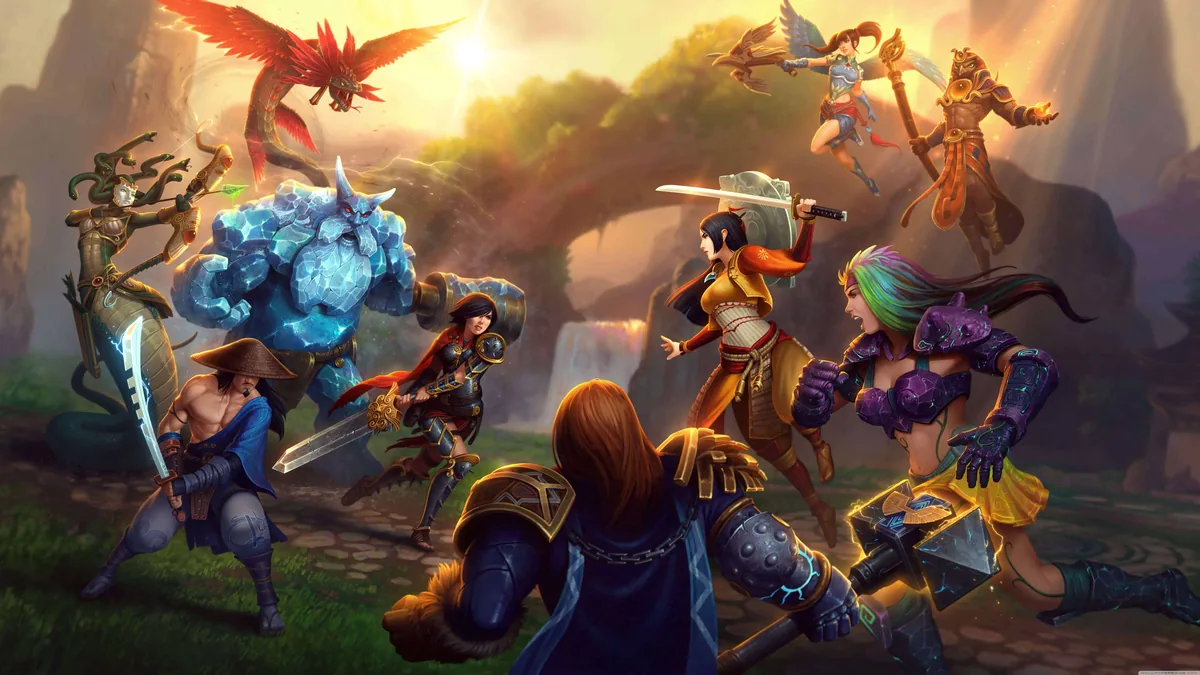
Smite is a free-to-play MOBA game developed by Hi-Rez Studios.
Gods from multiple mythologies serve as playable characters in the game. Each god has three base abilities, one ultimate ability, and one passive ability. Each character can buy up to 6 passive items that grant stats bonuses and up to 2 active items that give the player new abilities such as teleporting or healing. Such items don't require mana but have a long recovery time.
The goal of the game is to destroy the opposing team's lane defenders and their Titan. Players are followed by minions that deal small amounts of damage to towers, lane defenders, the Titan or the opposing players.
Sources & attribution
- Game data (release year, genres, platforms, system requirements, description, cover art) via RAWG.io, retrieved 2026-08-21.
- GPU relative-performance indices via TechPowerUp GPU database (relative performance), retrieved 2026-08-29.
- FPS estimates on this page are GameFigs planning estimates from the demand-tier + GPU-index model — not benchmark results.
How the SMITE optimization card & FPS estimate are computed
Each game is scored on a 0–9 demand tier from its published PC requirements (and a year/genre fallback when requirements are absent). The FPS estimate compares your selected GPU's relative-performance index against the tier's required index using a diminishing-returns curve, then scales for resolution. The settings card maps the demand tier and your hardware to a starting preset, an FPS band and an upscaler recommendation. All outputs are planning guides — verify in-game with the built-in benchmark when available.
Tools for SMITE
Check your hardware against this title, then set your gear up for it.